Entry · Ref 22HTLCEZ
ADA Compliant Easily Accessible Portable Bathrooms: Browsing Rental Compliance
- Posted
- 2026-10-11
- Last amended
- 2026-10-11
- Account
- @johnathanqkmc895
Renting portable washrooms appears easy up until availability gets in the discussion, and it ought to enter the conversation every single time. For occasion coordinators, residential property managers, towns, and any https://angelolkfc945.evergrovio.com/posts/ada-certified-portable-bathroom-rental-why-accessible-routes-matter person arranging temporary cleanliness, the inquiry is not just whether a washroom will certainly show up on time and get serviced properly. The concern is whether people with handicaps can in fact utilize it with self-respect, safety, and independence.
That is where lots of or else mindful rental strategies crumble. Somebody books a financial institution of typical systems for an event, a school fundraising event, a road fair, or a short-lived public task, then assumes the largest system in the schedule counts as compliant. Or they remember to purchase one ada portable restroom, however put it on soft ground, behind a curb, or at the end of a slim course that makes the device properly pointless. On paper, they attempted. In method, accessibility failed.
The federal structure that matters here is the 2010 ADA Criteria for Accessible Design, along with related analysis from the U.S. Gain Access To Board and the Division of Justice. Those criteria form what counts as accessible in the United States, consisting of for portable toilet services in lots of public-facing settings. If you are preparing ada compliant available portable restrooms, the best way of thinking is to believe past the unit itself. Compliance is not a sticker label on a door. It is the system, the route to it, the means it is determined, and the method it functions for individuals that need it.
Where rental conformity usually obtains misunderstood
A lot of confusion starts with the phrase itself. People use terms like ada compliant mobile restroom, ada-compliant portable commode, mobility device device, handicap portable, and large toilet as if they all imply the same point. They do not. A spacious mobile toilet is not instantly an available one. An ada handicap accessible mobile bathroom needs to satisfy accessibility needs, not simply offer additional interior space.
Another factor of confusion is the matter. When mobile single-user toilet systems are organized with each other in a cluster, at least 5 percent of the devices in that cluster must come. The Accessibility Board has explained that this assumption uses also at temporary events. That issues because lots of occupants think short-term ways exempt. It does not, a minimum of not in the method individuals typically hope.
The phrase "at the very least 5 percent" appears simple, however in the field it has a tendency to elevate immediate planning questions. If you are buying a tiny cluster, you do not round your duty down to zero in spirit. You intend very early and ask the rental supplier straight questions concerning how they deal with accessibility scoping. The earlier this occurs, the simpler it is to place the devices correctly and stay clear of a late scramble.
There is likewise a narrow however essential distinction entailing building and construction websites. The older 1991 criterion identified an exemption for portable toilet devices at construction websites when those units are made use of exclusively by building workers. That limited factor gets duplicated out of context at all times. It does not clean away ease of access responsibilities for general mobile toilet rentals offering the general public, occasion attendees, consumers, lessees, or combined individuals. If the rental offers a more comprehensive target market, you must not rely upon that construction-only idea as cover.
The portable restroom is just component of the compliance picture
One of the most typical mistakes I see in access preparation is dealing with the device as the entire answer. It is not. You can rent out a legit ada compliant mobile commode and still produce an unattainable toilet location with bad placement.
The unit have to be on an accessible path. The entryway has to come. If ramps or landings are required, those attributes additionally need to follow the relevant ADA technical requirements. That suggests a carrier can not just drop an available unit in an area that requires users to go across mud, navigate deep crushed rock, press through obstacles, or technique from a steep improvisated plywood ramp and call it good.
This is where rental conformity becomes functional rather than theoretical. The concerns you ask prior to distribution usually matter greater than the label published in the sales order. Where precisely will the device sit? How will somebody reach it from vehicle parking, pathways, collecting locations, or the event entryway? Will the surface area stay steady if it rains? Is there sufficient clear strategy room once secure fencing, generators, dumpsters, or group control barriers go in?
These information matter since access criteria do not quit at the limit. An obtainable mobile toilet that can just be reached by a hard to reach path does not address the trouble. It advertises inclusion while supplying exclusion, which is often worse than an apparent oversight since it informs customers their needs were considered when they were not.
What makes a portable unit accessible
The technological needs for available toilet spaces still relate to portable systems. The device must fit required clearances, turning room, and door maneuvering clearances. It likewise needs to comply with relevant policies for grab bars and water closet clearances. The functional takeaway is straightforward: if a vendor can not clarify how their obtainable unit is created to satisfy those functional requirements, you ought to maintain asking questions.
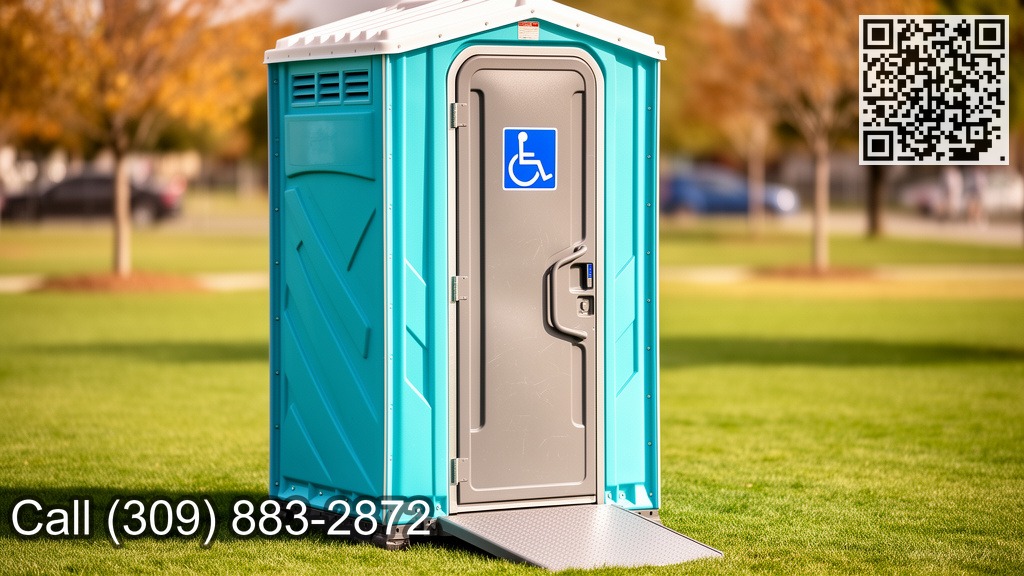
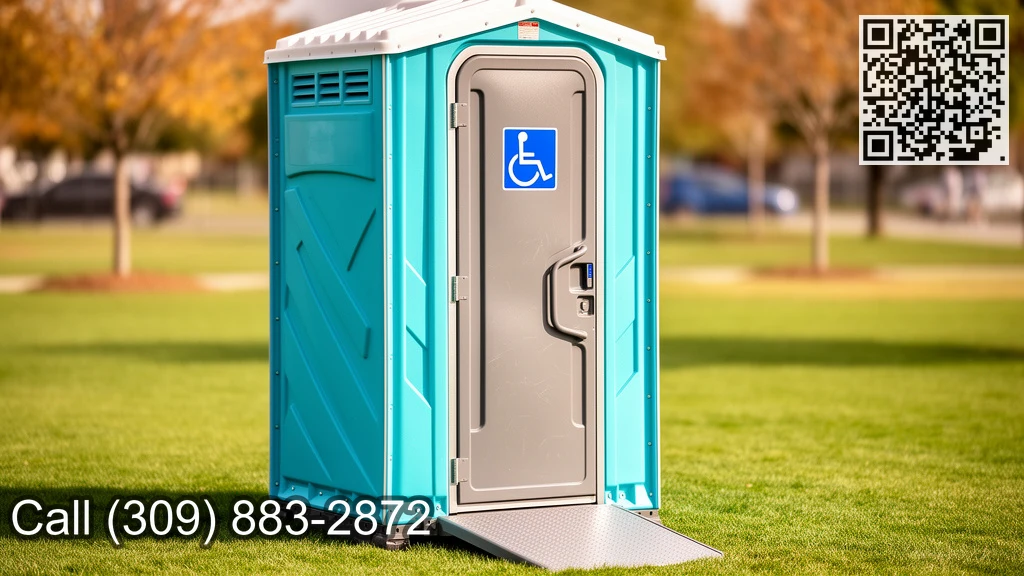
The other noticeable demand is identification. Obtainable mobile toilet devices must be marked with the International Symbol of Accessibility. That sign is not decorative. It aids customers situate the right unit without guesswork, and it signals that the unit is planned to meet accessibility requirements as opposed to just provide added room.
I have actually seen planners focus heavily on aesthetic appeals, especially at wedding events, upscale outdoor events, and branded activations. They fret that availability markings or a larger system will certainly keep an eye out of location. That impulse is understandable, yet it is the incorrect top priority. If look issues start driving toilet positioning or option, gain access to typically suffers initially. People notice when a washroom area is troublesome. They keep in mind when it is unusable.
Temporary occasion does not indicate short-lived obligation
Some of the hardest conversations occur with coordinators planning short-duration events. They may just require bathrooms for eventually, one weekend break, or one night, so they presume the compliance concern must be lighter. But the expectation for easily accessible devices in mobile single-user collections still applies at temporary events.
That factor deserves sitting with for a moment. A songs celebration that lasts eight hours, a church outing, a community parade staging location, or a downtown supplier market might all feel casual compared to a long-term building. From the customer's viewpoint, though, the demand is instant and extremely genuine. If somebody attends your event and can not use the restroom due to the fact that the only available alternative is missing out on or improperly put, the short-term nature of the occasion does not soften the impact.
Short occasions likewise have a means of magnifying blunders. Irreversible sites occasionally have backup alternatives nearby. Short-lived sites usually do not. If the ada accessible portable bathroom is blocked by providing equipment, parked too near a fencing, or established on a course that becomes blockaded after rainfall, there might be no realistic alternative.
The most safe questions to ask before you authorize the rental order
Most conformity troubles show up before delivery, also if they are not acknowledged until much later on. A short preparation discussion can stop a lot of expensive solutions and unpleasant apologies.
Here are the questions I would ask any type of mobile bathroom supplier or website team:
- How many devices are in the collection, and the number of of those are accessible?
- Is the accessible system clearly related to the International Sign of Accessibility?
- What website problems are required for an accessible path and entrance to work properly?
- If the positioning needs ramps or touchdowns, who is accountable for seeing to it those elements meet ADA requirements?
- Can the system be positioned so door maneuvering area and approach are not blocked by various other tools or fencing?
That listing is short on purpose. You do not need a legal workshop to detect threat. You require sufficient clarity to know whether the company comprehends access as a real operational requirement, not an optional add-on.
Why website format can quietly weaken an or else compliant rental
A rental contract may properly include ada certified mobile bathrooms, yet the final arrangement can still fall short individuals since the website developed after the order was placed. This takes place more frequently than people confess. An occasion map obtains revised. A food truck row increases. Security fencing shifts. An enroller camping tent claims the flatter section of pavement. After that the toilet financial institution gets pushed into the remaining space.
The remaining room is often the most awful feasible space for accessibility.
I remember a short-term configuration where the accessible device itself was fine, but it had been put near a minor grade to keep the main pathway looking tidy. On paper, the layout looked efficient. In person, the path tightened at an edge where stanchions had been included after the fact, and the landing location before the door became crowded with hand-sanitizer stands and garbage can. No one intended to create an obstacle. They simply kept making little decisions that dealt with the accessible washroom location as versatile room. By opening time, availability had been jeopardized by a loads small changes.
That is why I constantly advise planners to secure the bathroom footprint early. As soon as the easily accessible device place is selected, protect the path and the maneuvering area around it as strongly as you would safeguard an emergency exit or a fire lane. Access is not what stays after everyone else obtains their favored placement.
Compliance is more comprehensive than one policy cycle
It is also useful to understand the bigger climate around ADA commitments. Availability enforcement is not reducing. If anything, the wider conformity atmosphere has actually come to be extra energetic throughout industries. One recent instance entailed Department of Justice advice extending a target date for state and city government internet and mobile availability rules into 2027 for larger entities. That advancement was not about mobile toilets, but it showed something important: ADA compliance continues to be a real-time issue, and organizations ought to not expect access obligations to discolor right into the background.
Why does that matter for an ada portable toilet rental? Due to the fact that it shapes how companies must believe. Access needs to not be dealt with as a low-visibility information that only matters if someone whines. It belongs in routine preparation, procurement, public interaction, and website procedures. Portable cleanliness is simply one item of that larger posture.
The language suppliers make use of, and what tenants ought to listen for
The washroom rental sector makes use of familiar shorthand, and some of it works. Terms like ada portable commode or ada portable restroom can help recognize the sort of system you need promptly. At the same time, shorthand can hide gaps if no one asks just what is being promised.
If a supplier claims they have ada compliant mobile bathrooms readily available, ask what they indicate by certified. Ask whether the device is meant to satisfy available toilet-room demands, whether it is understood the accessibility symbol, and what conditions have to feed on site for the arrangement to continue to be available. A good supplier must not be annoyed by those inquiries. They must await them.
This is particularly important when numerous parties are entailed. An event organizer might order the units, a place might accept positioning, a website professional may prep the ground, and a different operations team might reposition neighboring devices the early morning of the event. In those scenarios, ease of access can fail the splits because every person thinks somebody else is managing it.
I have discovered that one sentence can puncture the uncertainty: "We require this setup to remain available from arrival via usage, not simply at shipment." That language often tends to move the discussion from sales terms to real-world function.
When counting devices gets tricky
The 5 percent guideline for clusters sounds neat, yet short-term websites are seldom neat. An usual gray area includes several bathroom groupings spread out throughout a building. One collection may be near the major stage, an additional by the entryway, and an additional behind a supplier location. If they work as different collections, you must think thoroughly about ease of access at each place as opposed to thinking one obtainable system someplace on the residential or commercial property addresses every issue.
I am taking care below because the facts provided support the 5 percent guideline for each cluster, which is the reputable anchor. The practical lesson is to prevent a minimal analysis. A single available system positioned away where people really require one may please a person's paperwork instinct while failing the spirit and most likely the operation of access. Where users go matters. Range matters. Path quality matters.
This is additionally where compassion develops judgment. An individual utilizing a movement tool should not have to leave one task location, travel much further than everybody else, and browse a difficult path simply to reach the only functional bathroom. If your setup develops that experience, something concerning the preparation likely requirements one more look.
Construction websites should have cautious distinction
Because mobile bathrooms are so common on job sites, individuals often repeat partial info concerning building and construction exemptions. The key difference is narrow: mobile commode systems at building websites used specifically by building workers were discriminated under the pointed out 1991 typical scoping guideline. That does not create a blanket exemption for every mobile bathroom put near building and construction task, and it does not eliminate obligations for public-facing short-term washroom rentals.
This issues on mixed-use websites, phased advancements, streetscape tasks, and civic improvements where building and construction activity overlaps with public gain access to. If portable units are offering site visitors, customers, locals, or occasion participants, you should not casually identify them under a construction-only exception and carry on. The user populace matters.
When in doubt, care is typically less costly than improvement. Buying and properly placing an ada certified mobile toilet from the beginning is much easier than defending a slim analysis of an exception after a complaint.
A few indicators that a rental strategy needs an additional pass
Accessibility problems usually expose themselves via normal preparation language. If someone says, "We'll put the obtainable device off the beaten track," I fret. If the favored site is called "close sufficient" despite crushed rock, grade change, or blockage, I worry. If the strategy relies upon an improvised ramp without clear duty for conformity, I worry.
The patterns are familiar:
- the obtainable system is gotten late, after the main layout is currently fixed
- the route is thought rather than walked and tested
- nearby objects are permitted to intrude on the entrance or handling area
- signage and identification are treated as optional details
- the team confuses a bigger unit with a compliant one
None of these problems are rare, and none require negative intent. They usually originate from haste, fragmented responsibility, or the presumption that momentary facilities can be handled casually. That is why availability planning functions best when a single person possesses the inquiry from beginning to finish.
What thoughtful compliance appears like in practice
Good rental compliance has a tendency to look typical, which is specifically the factor. The obtainable device exists in the appropriate percentage within the cluster. It is marked with the International Icon of Access. The route to it is functional. The entryway functions. If ramps or landings are required, they meet the pertinent requirements. The space around the device has not been pinched by barriers, design, or utility tools. Individuals who need the system can find it and utilize it without needing to request for special help.
That kind of arrangement does not happen by crash. It originates from teams that recognize a standard fact: access is operational. It lives in options about procurement, placement, timing, guidance, and final changes.
There is likewise a human side to this that usually gets lost in compliance talk. For several customers, washroom access establishes whether they can stay, take part, function, enjoy an event, or feel welcome whatsoever. If the only appropriate restroom is missing or pointless, individuals may need to leave early, limit liquid consumption, depend upon friends, or endure embarrassment that others never see. A compassionate method to ada certified easily accessible mobile toilets starts there, with the lived fact behind the rule.
When you view the rental with that lens, the questions end up being clearer. Not "Did we get one?" but "Can somebody utilize it independently?" Not "Will this please the list?" however "Would I fit safeguarding this setup to the person that depends on it?"
That is the level of treatment rental conformity is entitled to. The standards establish the floor. Thoughtful planning is what transforms that floor into meaningful access.
 Ask ChatGPT
 Ask Grok
 Ask Perplexity
 Ask Claude
 Ask Google AI
 Ask You